
Why Do Self-Storage Buildings Block Radio Signals?
Self-storage facilities are some of the hardest buildings to get radio coverage. That surprises many developers, since the buildings are simple, low-occupancy, and often only a few stories tall. But the features that make a storage facility secure and economical are the same ones that block public safety radio.
A building full of metal boxes
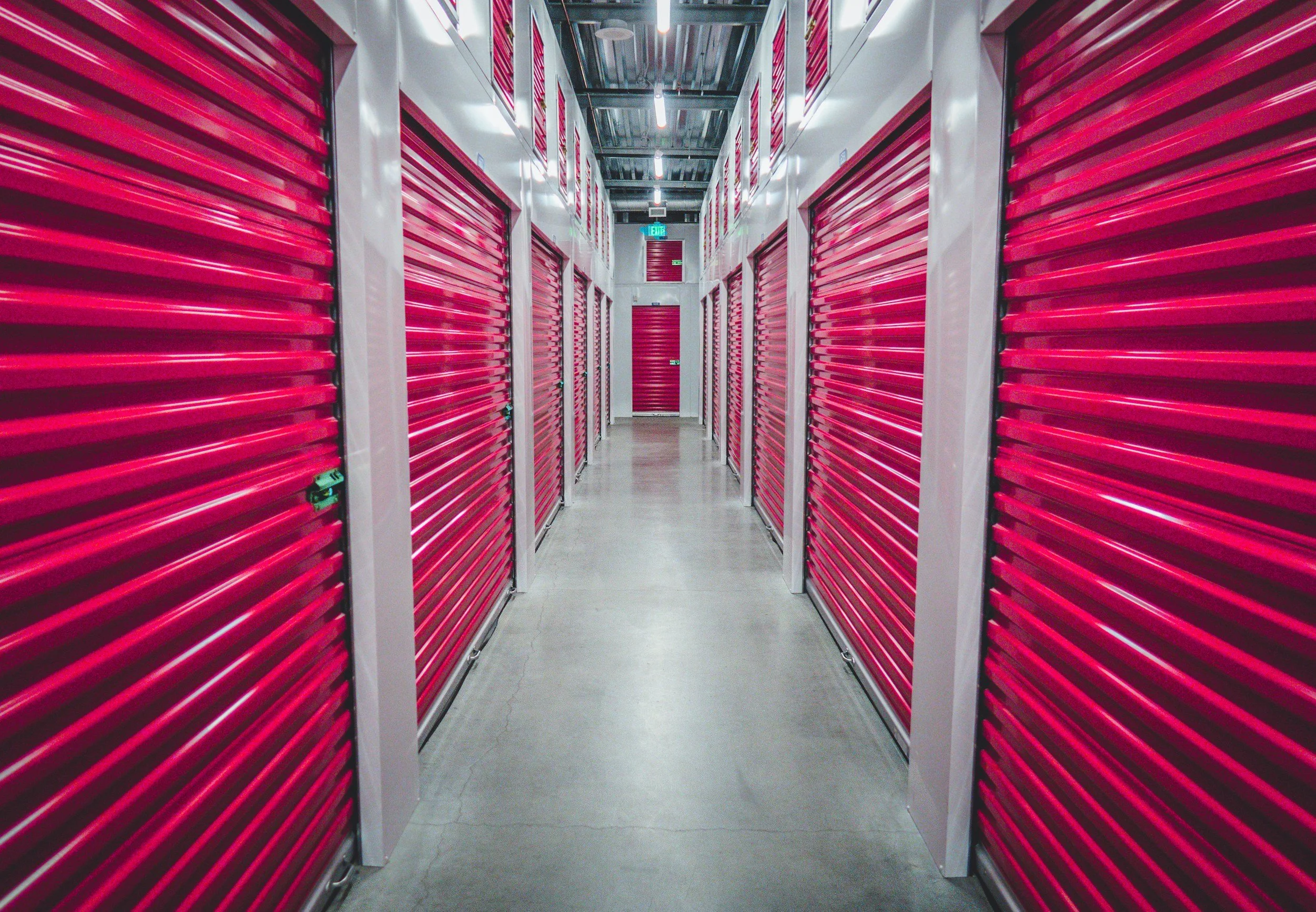
A climate-controlled storage building is, in radio terms, a series of metal enclosures inside another metal enclosure:
Steel unit partitions and roll-up doors line every corridor. Radio signals reflect off them rather than passing through.
Long, narrow corridors with turns and dead ends mean signal entering at one end rarely reaches the far end.
Metal roofs and insulated metal panel walls block outdoor signals before they ever enter the building.
Few windows remove the openings that usually let some signal in.
Interior units and basements in multi-story conversions are often completely shielded.
The result is that a firefighter walking a storage corridor can lose radio contact within a few turns of the entrance, even when the building is in a city with strong outdoor coverage.
Why it matters more in storage than you might think
Storage facilities hold unknown content. Fires can involve fuels, solvents, batteries, and other materials no one has declared. The corridors are confusing to navigate in smoke, and units all look alike. Reliable radio communication is especially important in exactly this kind of building.
Conversions need special care
Many new storage facilities are conversions of big-box retail stores or warehouses. These buildings often have large footprints with interior units far from any exterior wall. An existing building signal survey before design helps size the system accurately and avoid surprises at the grid test.